
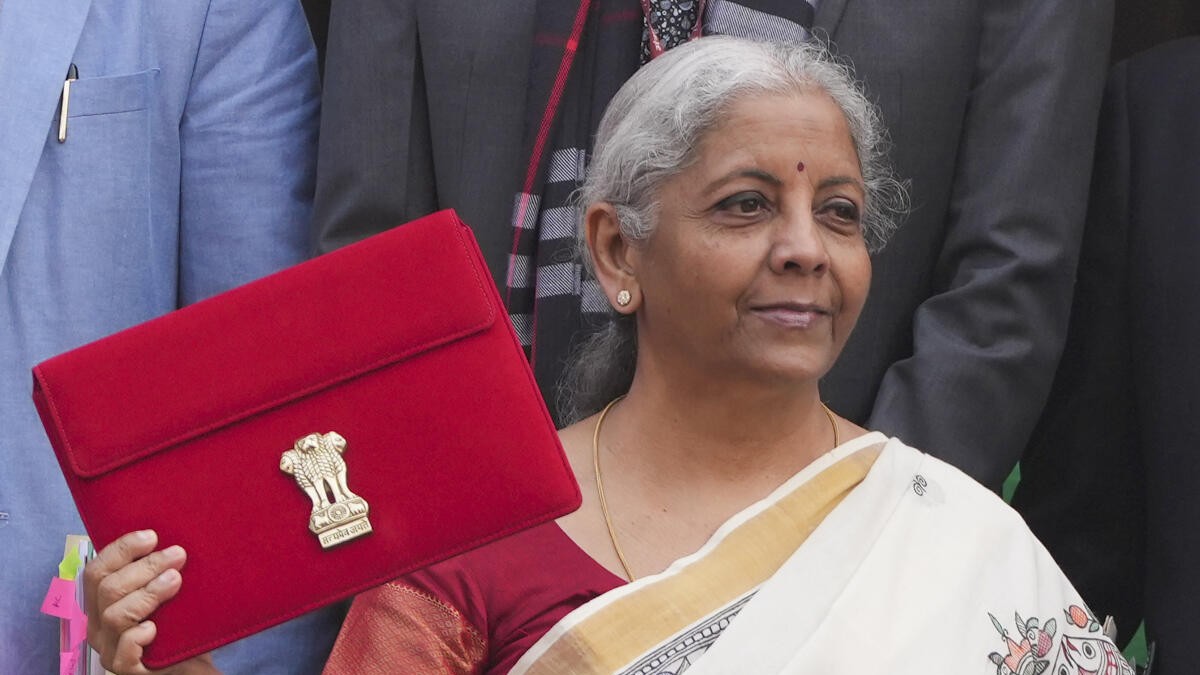
Budgets are as much instruments of politics as they are exercises in sound finance and economic prudence. The 2026–27 Union Budget is no exception, reflecting both fiscal strategy and political calculation.
Arguably, the most significant development is not in the Budget itself, but in the broader fiscal federalism framework underpinning it: the 16th Finance Commission (FC) awards. While the overall share of states in central taxes remains unchanged at 41%, the formula for distributing these taxes among individual states has been overhauled. For the first time, state-wise contributions to national GDP are factored into the devolution formula, turning growth into an incentive rather than a disincentive for states to mobilise central taxes.
This change represents a decisive step toward addressing concerns over the perceived North-South divide in fiscal allocations (more accurately, the divide between poorer and wealthier states). Under the new formula, states like Karnataka, Kerala, and to a smaller extent Tamil Nadu gain a larger share of central taxes, while Bihar, Madhya Pradesh, and Uttar Pradesh see their shares reduced. This rejigging not only eases southern states’ concerns but may also lay the groundwork for the next major federal challenge: the delimitation exercise following the 2027 Census, which will redraw parliamentary constituencies. Politically, it aligns with the BJP’s broader objective of expanding influence in southern India, while ensuring fiscal prudence.
Beyond fiscal federalism, the Budget reflects the government’s ongoing ideological and political priorities. Cultural nationalism remains central to policy design, linking India’s heritage with economic growth. References to temple towns as engines of Tier II and III city development, the promotion of Buddhist circuits in the Northeast, and curated tours of archaeological sites all reflect an attempt to intertwine economic policy with emotive cultural narratives. Similarly, yoga and ayurveda have been positioned as drivers of growth in services and agriculture, further cementing culture as a pillar of economic strategy.
Political considerations also extend to national security. The Budget increases the Intelligence Bureau’s allocation from just above ₹4,000 crore in 2024–25 to over ₹6,700 crore in 2026–27. Defence spending rises by more than ₹1,00,000 crore in Budget Estimates compared to the previous year, with Revised Estimates for 2025–26 already exceeding Budget Estimates by over ₹70,000 crore, reflecting the fiscal impact of Operation Sindoor.
While major welfare announcements are limited, the government has sought to pre-empt criticism. The Mahatma Gandhi National Rural Employment Guarantee Scheme (MGNREGS) has been rebranded as the Viksit Bharat–Guarantee for Rozgar and Ajeevika Mission (Gramin) or VB–G RAM G programme, increasing states’ contribution from 10% to 40%. At the same time, the Centre has raised its allocation to ₹95,692 crore, up from ₹86,000 crore under MGNREGS, signaling a focus on long-term developmental goals rather than purely fiscal considerations. Implementation challenges, however, could render parts of the allocation underutilised.
Taken together, the Budget’s political contours are best understood at a macro level. Under Narendra Modi, the BJP has honed a “political economy” approach, seeking to maximise political returns from fiscal decisions. This involves attribution to leadership, association with cultural projects, and assertive displays in national security when needed. Fiscal largesse at both the state and central levels has been strategically aligned to reinforce the government’s broader political narrative.
