
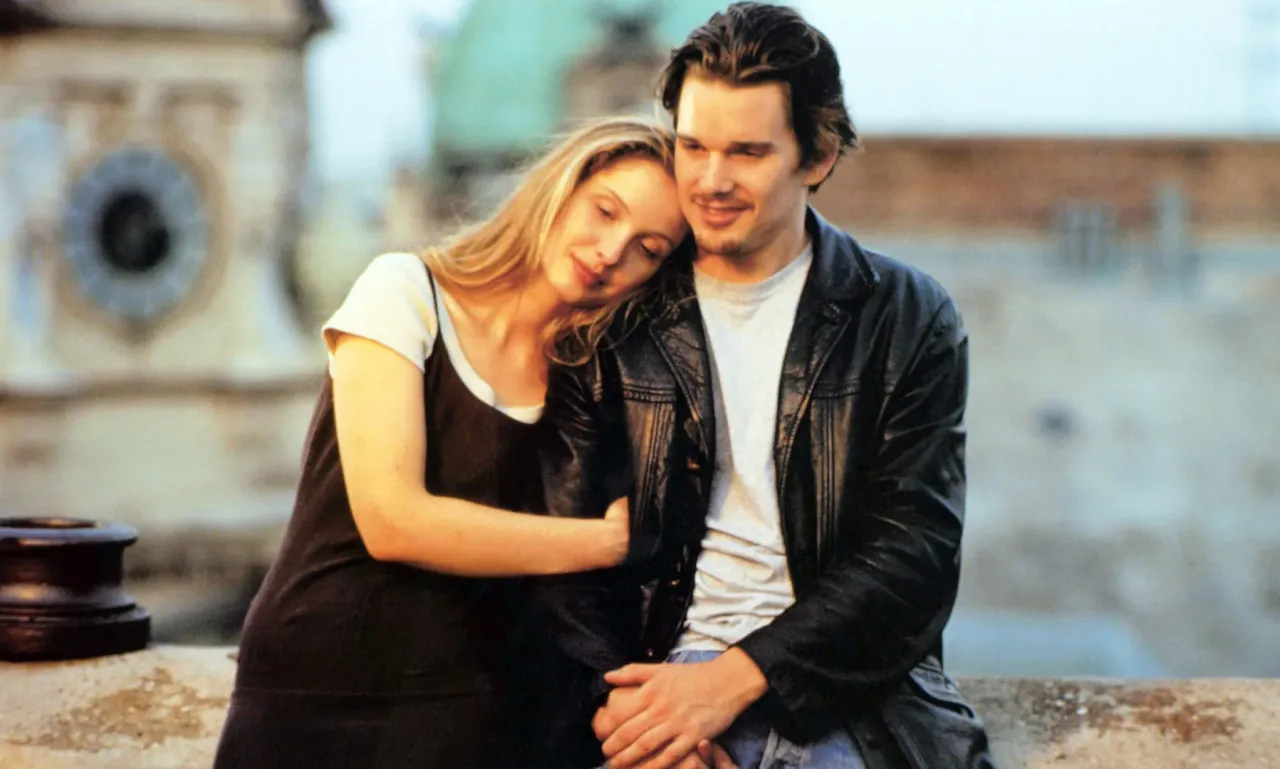
Exactly 31 years ago, a modest film with no star power and no clear box-office ambitions quietly set in motion what would later become one of the most thoughtful, consistent, and widely admired trilogies in cinema. At the time, no one could have imagined its lasting impact. Yet even today, moments from all three films continue to circulate online — shared as reflections on love, life, morality, and human connection.
In a film industry that has often dismissed romance as either lightweight or overly predictable, this trilogy made an unusually bold choice: it focused almost entirely on conversation. There were no dramatic twists, no manipulative conflicts, and no sweeping musical cues designed to guide emotions. Instead, it relied on a simple but risky belief — that compelling characters, honest dialogue, and a clear creative vision could sustain an entire feature film. That gamble paid off.
Before Sunrise and the Birth of a Landmark Trilogy
Released in 1995, Before Sunrise introduced audiences to Jesse (Ethan Hawke), an American traveling through Europe, and Céline (Julie Delpy), a French student he meets by chance on a train. On a whim, they decide to get off in Vienna and spend a single night together before continuing their separate journeys. That’s essentially the entire story — and that simplicity is exactly the point.
The film isn’t concerned with dramatic events but with the gradual unfolding of connection. Its narrative is built from conversations, shared walks, fleeting glances, and small, ordinary moments that most movies would overlook. What might seem minimal on paper becomes deeply engaging on screen.
In hindsight, the film feels almost experimental — and in many ways, it was. Director Richard Linklater has spoken about how the story was inspired by a real experience from 1989, when he spent an entire night walking and talking with a woman he had just met. Rather than recreating the event itself, he aimed to capture its emotional truth: the immediacy of connection, the unpredictability of conversation, and the way certain encounters linger long after they end.
Part of what makes Before Sunrise feel so timeless is its refusal to frame Jesse and Céline as destined soulmates. They aren’t idealized or perfectly complementary. They’re curious, flawed, occasionally insecure, sometimes arrogant — in other words, deeply human. Their conversations shift effortlessly between profound ideas and trivial observations, never trying too hard to sound insightful. That natural rhythm is what makes the film feel authentic and relatable.
This sense of realism reflects Linklater’s broader filmmaking philosophy, later seen in projects like Boyhood. Time is respected, emotions aren’t rushed, and viewers aren’t handed easy answers. Instead, the audience is invited into the experience, encouraged to listen, reflect, and recognize themselves in the dialogue. The film understands that meaningful connection often comes from quiet honesty, not grand declarations.
How the Trilogy Evolves Over Time
When Before Sunset arrived nine years later, it became clear that the story had grown beyond a single film. While the original wasn’t planned as part of a trilogy, its continuation emerged naturally from years of discussion between Linklater, Hawke, and Delpy. They weren’t interested in extending the story for its own sake, but in exploring how time reshapes people and relationships.
Set in Paris, the second film reunites Jesse and Céline years after their night in Vienna. The youthful idealism of the first film has been replaced by emotional weight and unresolved feelings. Jesse is now a published writer, Céline has built a life of her own, yet the tension of what never happened hangs heavily between them.
Unfolding almost in real time, Before Sunset carries a quiet urgency. Not because of external stakes, but because both characters — and the audience — are acutely aware of time slipping away. The film refuses to romanticize missed chances. Instead, it confronts regret, frustration, and the painful realization that some moments cannot be reclaimed.
Nine years later, Before Midnight completes the trilogy by taking its honesty even further. Set during a vacation in Greece, the film shows Jesse and Céline no longer as people falling in love, but as partners struggling to stay connected. Any lingering illusion of idealized romance is stripped away.
The conversations are longer, sharper, and often uncomfortable. The conflicts feel deeply familiar to anyone who has experienced a long-term relationship. There are no villains and no simple resolutions — only two people grappling with competing needs, compromises, and the passage of time. For many viewers, this final chapter is the most challenging, precisely because it refuses to soften the truth.
Why the Trilogy Endures
What makes the Before trilogy so exceptional isn’t the absence of conflict, but the clarity of its purpose. Each film builds upon the last, not to correct it, but to deepen and complicate it. The lightness of Before Sunrise matures into the emotional gravity of Before Sunset and ultimately collides with reality in Before Midnight.
Together, the three films form a complete emotional arc — not just for the characters, but for the audience growing alongside them. The trilogy proved that dialogue-driven, adult cinema doesn’t need formulas or perfect endings to resonate. It only needs honesty.
More than three decades ago, it all began with a simple idea: two people talking. And against all expectations, that turned out to be more than enough.
