
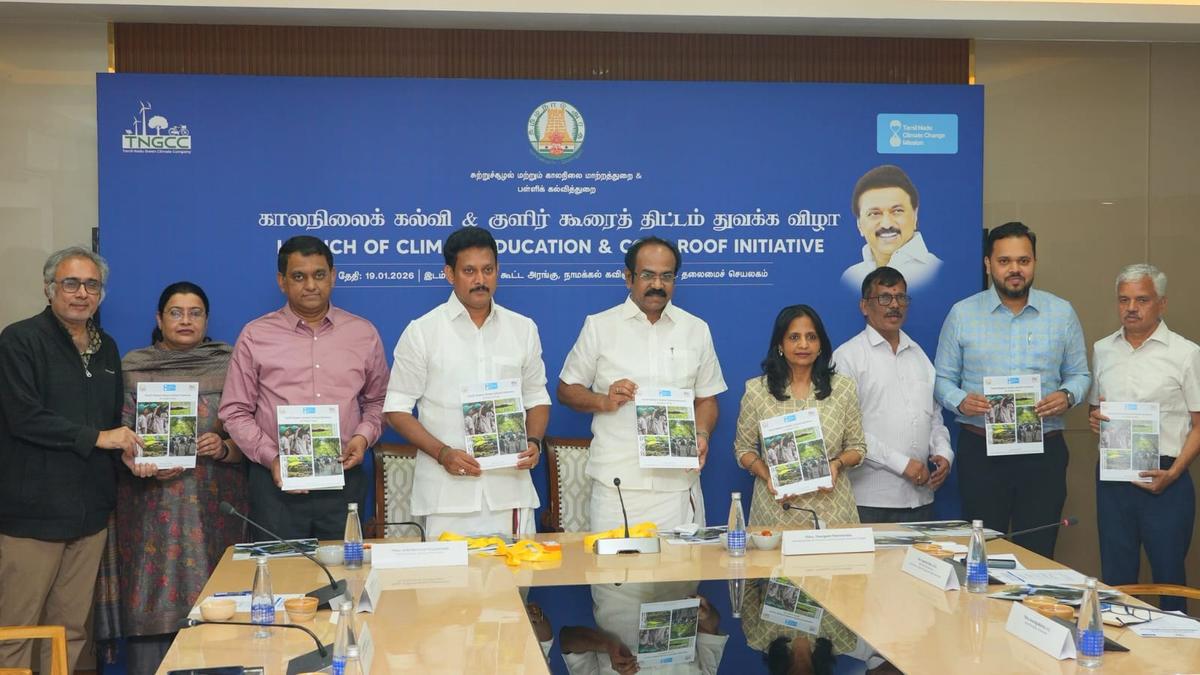
In a major initiative to improve learning environments and student wellbeing, the **Tamil Nadu government has rolled out a combined climate education and cool roof program in 300 government schools across the state. The project, part of the state’s ongoing education and climate resilience plans, aims to reduce extreme indoor classroom temperatures and teach students about environmental protection and sustainability.
Many classrooms in the region face high daytime heat that can affect students’ concentration and academic performance. By installing cool roof coatings, interior temperatures have been shown to drop significantly, even without heavy reliance on fans, helping create a more comfortable learning space.
Alongside the physical upgrades, hands‑on climate education modules will be taught, including nature camps, teacher training programs, and state‑wide quizzes that engage students with real‑world environmental science concepts.
The initiative builds on a successful pilot project in Ambattur, which saw measurable reductions in both ceiling and indoor heat levels, and received enthusiastic support from participating schools and families.
Officials say the program not only improves school infrastructure but also empowers young learners to understand climate change, adaptation, and sustainability practices from an early age.
By combining practical infrastructure improvements with curriculum elements, Tamil Nadu’s approach reflects a growing trend in Indian education to integrate environmental awareness with everyday learning.
State education and environment leaders have also highlighted the long‑term benefits of climate‑resilient schools, including reduced energy use, better student health outcomes, and stronger community awareness — outcomes that could serve as a model for other states.
The rollout continues this academic year, with plans to monitor outcomes and expand the program if early results prove effective in enhancing both educational quality and student comfort.
